Open post

16th Century Listed Building Estate

Project Overview

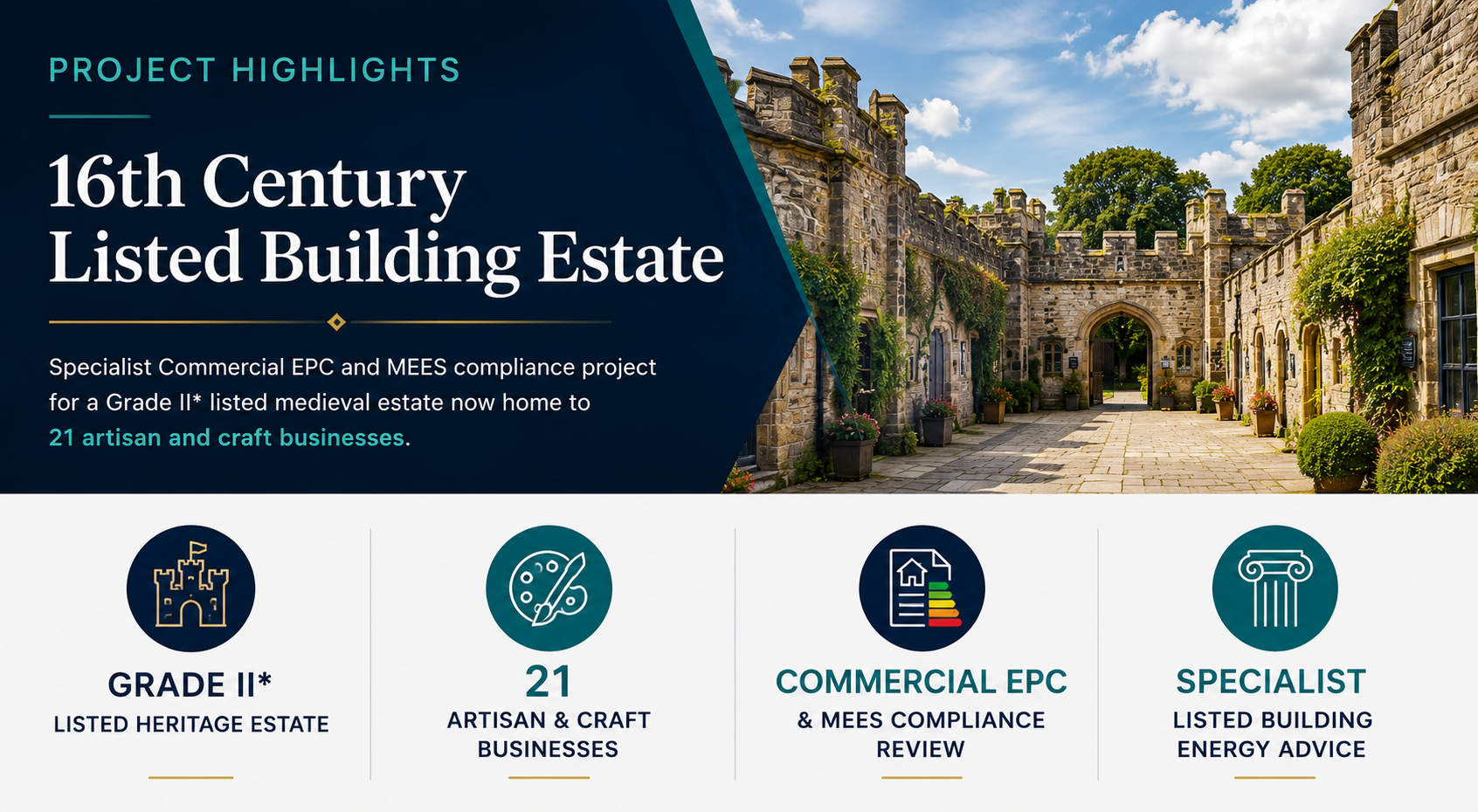
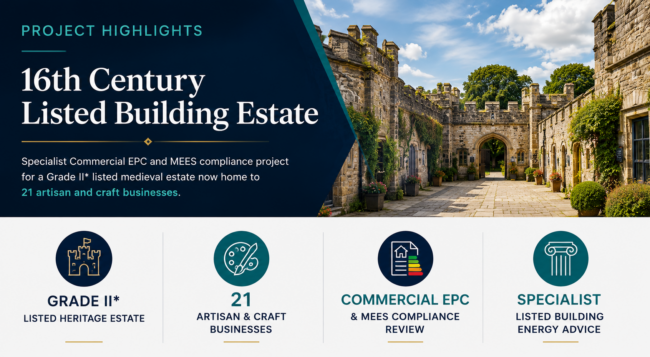
Brougham Hall is a remarkable Grade II* listed medieval estate with a history spanning centuries. Home to 21 artisan workshops, studios and craft businesses, the estate underwent a significant transition in 2024 when ownership and stewardship transferred from a charitable trust to a Community Interest Company formed by the tenant businesses themselves.

The new management team required specialist advice to understand their obligations regarding Commercial EPCs, Minimum Energy Efficiency Standards (MEES) and the unique considerations associated with listed and heritage properties.

The Challenge

There is a common misunderstanding that listed buildings are automatically exempt from the requirement to obtain an Energy Performance Certificate (EPC). In reality, listed properties and buildings located within conservation areas are not necessarily exempt, and property owners must understand whether an EPC is required for their specific circumstances.

Where a listed non-domestic property requires an EPC, it will also fall within the scope of the Minimum Energy Efficiency Standards (MEES) Regulations. Balancing compliance requirements with the protection of historic fabric and architectural significance presented a complex challenge for the estate.

The project involved assessing 21 occupied commercial units of varying ages, construction methods and uses, whilst carefully considering the limitations imposed by the building’s heritage status.

Our Approach

We undertook a comprehensive Commercial EPC and heritage compliance review across the estate. Detailed measured surveys were completed for each unit, including assessment of:

  • Building use and occupancy
  • Historic construction methods and materials
  • Windows, doors and glazing specifications
  • Heating and conditioning systems
  • Lighting installations
  • Energy performance characteristics

Our assessment process was entirely non-invasive, ensuring no damage or disruption to the historic fabric of the buildings.

Alongside the EPC assessments, we provided specialist guidance regarding listed building considerations, conservation requirements and potential pathways towards MEES compliance where improvements could be implemented without adversely affecting the character or appearance of the estate.

The Outcome

The project provided the Community Interest Company and its tenant businesses with a clear understanding of their Commercial EPC obligations, compliance position and future energy performance considerations.

Through detailed assessment and specialist reporting, the client gained the information needed to make informed decisions regarding energy performance improvements, future investment planning and compliance management, whilst preserving the historic character and significance of one of Cumbria’s most important heritage estates.

The result was a practical and balanced strategy that recognised both the regulatory requirements of modern commercial property management and the unique challenges associated with managing a Grade II* listed historic estate.
Open post

Industrial Estate Portfolio Compliance Review

The Challenge

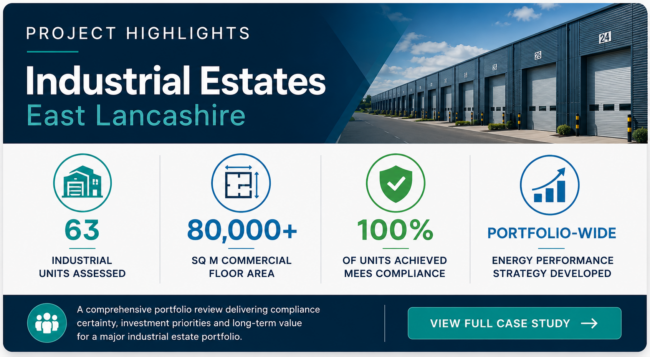
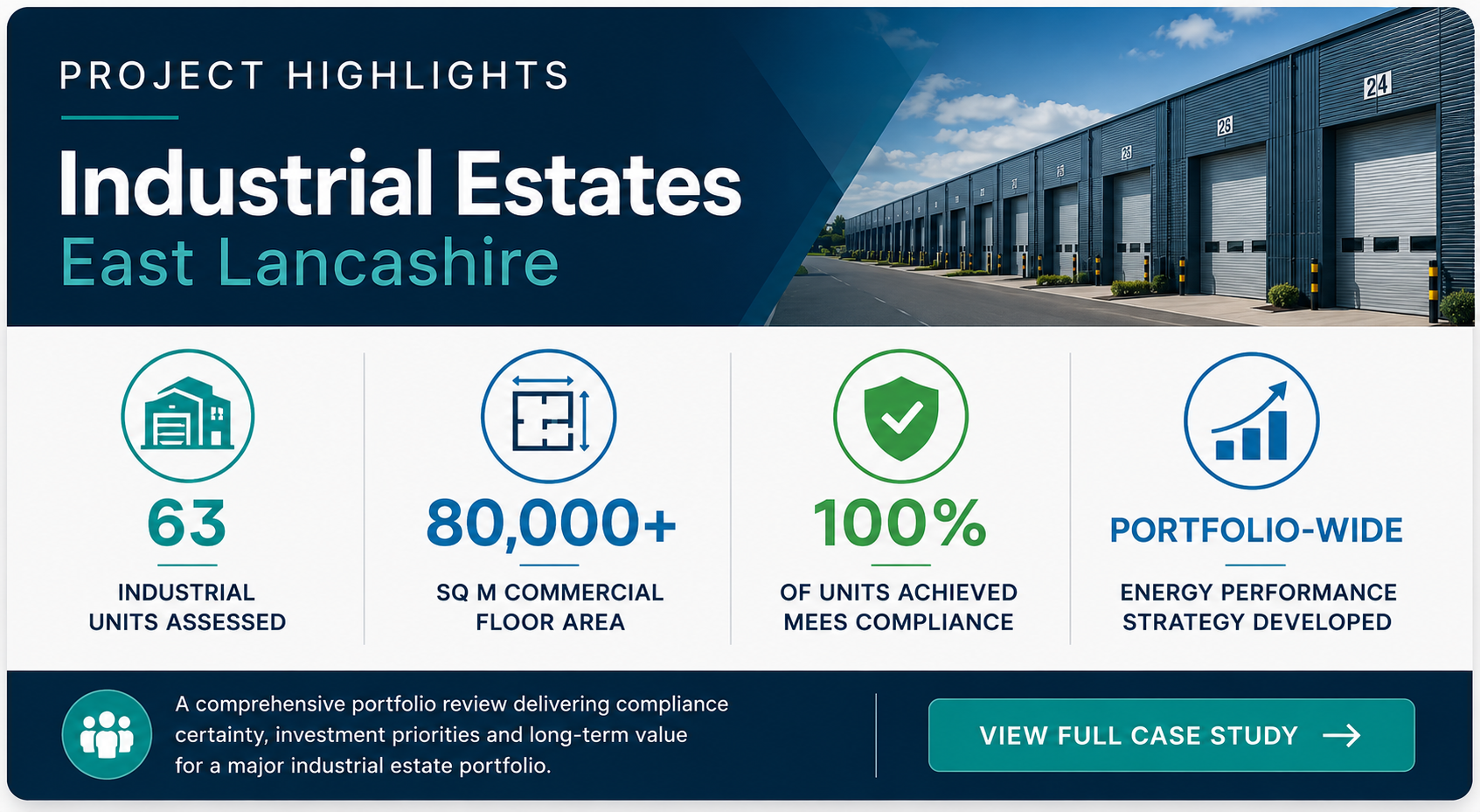
This project involved two industrial estates comprising 63 tenanted units within a former aircraft manufacturing facility originally constructed during the Second World War. The combined estates extended to over 80,000 square metres and represented a diverse range of industrial and commercial accommodation.

Having benefited from limited investment under previous ownership, many of the properties presented significant energy performance challenges. The new owners faced the considerable task of understanding the compliance status of the portfolio and developing a practical strategy to address future energy performance requirements whilst balancing investment priorities and tenant considerations.

Our Approach

We undertook a comprehensive review of the portfolio, carrying out EPC assessments across the estates and providing detailed reporting on asset performance, compliance risks and improvement opportunities. Our enhanced reporting enabled the client to identify priority assets, understand future compliance considerations and develop a phased improvement strategy.

The Outcome

Following completion of the EPC programme and review process, all 60+ units achieved ratings above the minimum MEES requirements, providing the client with confidence that the portfolio met current compliance standards. The assessments and reporting enabled the new owners to clearly understand the condition and performance of their assets, identify future investment priorities and establish a structured approach to ongoing energy performance improvements across the estates.

By achieving compliance across the entire portfolio, the client protected rental income, reduced future compliance risk and created a foundation for long-term asset enhancement and value preservation.

Open post

Local Authority Estate MEES Compliance Programme

Local Authority Estate MEES Compliance Programme

Project Overview

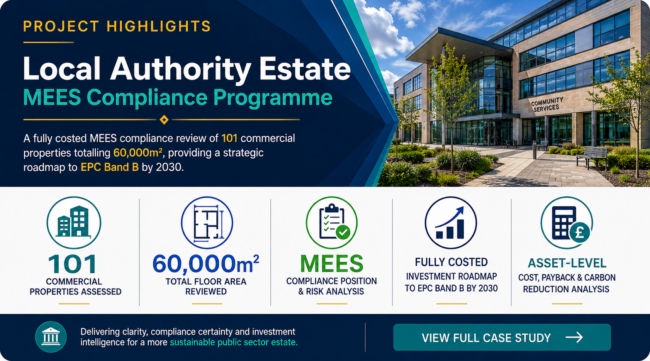
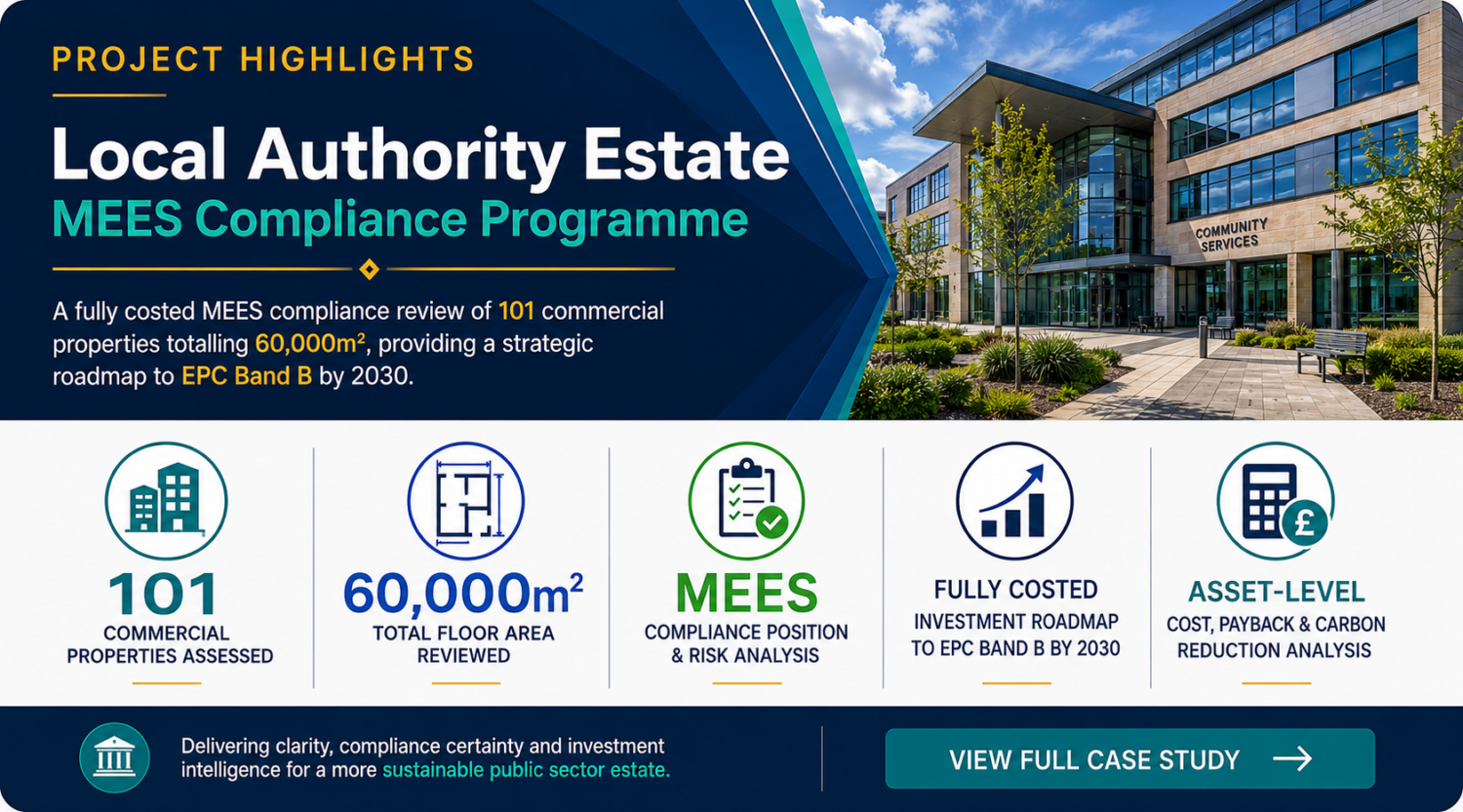
This strategic portfolio review involved a local authority estate comprising 101 commercial properties extending to approximately 60,000 square metres. The authority required a clear understanding of its existing compliance position against future Minimum Energy Efficiency Standards (MEES) targets, which at the time included an aspiration to achieve a minimum EPC Band B across the estate by 2030.

The project was designed to provide senior asset managers and decision-makers with a fully costed roadmap for future investment, enabling long-term budgeting and prioritisation of energy performance improvements across the portfolio.

The Challenge

Managing a large and diverse public sector property portfolio presents significant challenges when planning for future MEES compliance. Whilst individual Energy Performance Certificates provide a snapshot of current performance, they do not provide the detailed investment intelligence required to understand future liabilities, improvement opportunities and funding requirements.

The authority required a comprehensive assessment of all 101 assets to establish:

  • Current EPC and MEES compliance status
  • Future compliance risks
  • Potential improvement measures
  • Estimated capital investment requirements
  • Energy and carbon reduction opportunities
  • Timescales for implementation
  • Potential exemption positions under MEES regulations

Our Approach

We undertook detailed Commercial EPC assessments and Asset Energy Reviews across the entire estate. Each property was surveyed and modelled individually using SBEM, allowing us to evaluate building performance, identify improvement opportunities and assess multiple compliance scenarios.

For every asset, we produced detailed Property Energy Intelligence reporting that included:

  • Current EPC rating and energy performance profile
  • Future compliance assessment
  • Asset-specific improvement recommendations
  • Capital cost estimates
  • Discounted payback calculations
  • Seven-year payback assessments
  • Carbon reduction projections
  • EPC improvement pathways
  • Potential MEES exemption analysis
  • Indicative implementation priorities

This approach enabled the authority to move beyond simple compliance reporting and develop a strategic understanding of future investment requirements across the entire estate.

The Outcome

The project delivered a fully costed estate-wide compliance strategy, providing the authority with a clear roadmap towards future MEES targets and improved energy performance.

By combining Commercial EPC assessments with detailed asset-level investment modelling, the authority gained the information required to plan future capital expenditure, prioritise improvement programmes and manage compliance risk across 101 commercial properties.

The resulting portfolio intelligence enabled informed decision-making, supported long-term budget planning and established a practical framework for achieving future energy performance objectives whilst maintaining effective stewardship of public assets.

Scroll to top